
|
176| 0
|
[zhangyang]Remote interrogation Ⅱ |
|
BDSM
|
Published 2026-8-16 00:41:28
[Video Duration]: 00:57:38 [File Size]: 2722MB Topic: Yangyang’s trial for alleged corruption and torture to extract confessions Spokesperson: Investigator (netizen), Yangyang, Brother Mao Abstract: In a trial involving a missing 30 million yuan case, the prosecutor used inducements, torture and mental humiliation to force Yangyang to plead guilty. In the end, when Yangyang refused to plead guilty, the prosecutor forged a confession and decided to send him to a desert island prison. 1. Case background and interrogation game Regarding a case of missing funds involving 30 million yuan, the investigator and Yangyang started several rounds of games over the facts of the case and the attitude of guilty plea: 1. Core accusations and Yangyang’s excuse The whereabouts of the huge amount of money remains a mystery: The investigators accused Yangyang of disappearing out of thin air in the amount of 30 million from the accounts he handled, and pointed out that there were overseas accounts opened in his name that were involved in the funds. Yangyang firmly denied: Yangyang claimed that he was just an ordinary accountant and had no knowledge of it at all. He also emphasized that he was wrongly accused and that all operations were performed in accordance with company regulations. 2. Plea negotiation and exchange of benefits Inducement and inducement: The prosecutor proposed a "scapegoat" plan, implying that if Yangyang took the blame for his boss, he would receive millions in benefits, and promised to shorten the sentence to one or two years by being released on bail pending trial or receiving medical treatment. Refuse to compromise: Yangyang refused to plead guilty, believing that this was collusion between government and businessmen, and said that he would rather suffer pain than be a scapegoat, firmly believing that the law would eventually clear his name. 2. Torture and mental oppression When Yangyang refused to plead guilty, the prosecutor used a variety of methods to exert pressure: 1. Physical torture and humiliation Upgrading of torture instruments: During the interrogation, the prosecutor repeatedly ordered to tighten the torture instruments, including cuffing the hands behind the back, shortening the shackles, using ropes to bind the suspect, and threatening to use "death penalty" and other extreme methods. Mental torture: The prosecutor threatened to send Yangyang to a desert island prison, and hinted that he would face inhumane treatment during transportation and in the prison, in order to break down his psychological defense. 2. Social death threats Public humiliation: The prosecutor plans to destroy his social reputation by arranging for Yang Yang to be paraded through the streets and threatening to notify his relatives and friends to come and watch. Deprivation of the right to appeal: The prosecutor made it clear that Yangyang would be deprived of the opportunity to appeal within 24 hours, prohibited from writing a complaint or speaking, and planned to forge a confession. 3. Final judgment and follow-up arrangements When Yangyang refused to plead guilty, the prosecutor made the final decision unilaterally: 1. Forgery of evidence and finalization of the case Forced signature: When Yangyang did not plead guilty, the prosecutor directly asked him to press his fingerprints to confirm his confession, and unilaterally concluded the case as "embezzling huge sums of money and refusing to plead guilty." Increased punishment: In view of Yangyang's "stubborn" attitude, the investigators decided to send him to a desert island prison far away from the coastline. The sentence is expected to be as long as 20 to 30 years. 2. Arrangements for economic exploitation Prison interest chain: The prosecutor instructed his subordinates to imprison Yangyang in the male prison area and required him to be sexually exploited, charging 500 yuan each time, as a means of generating income for the prison.  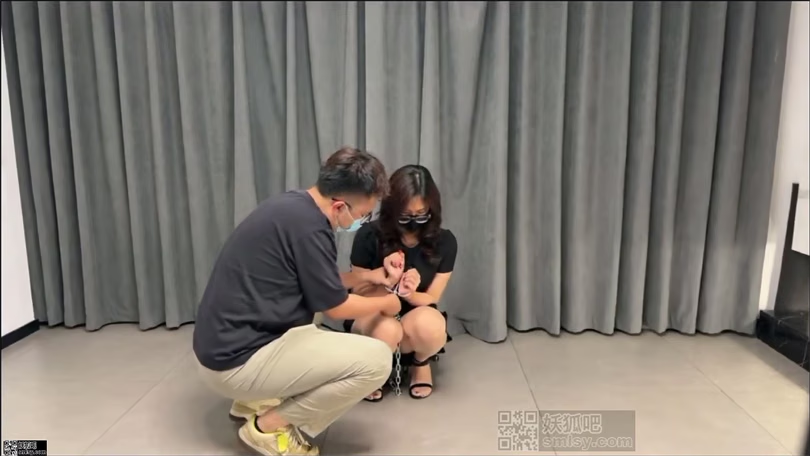    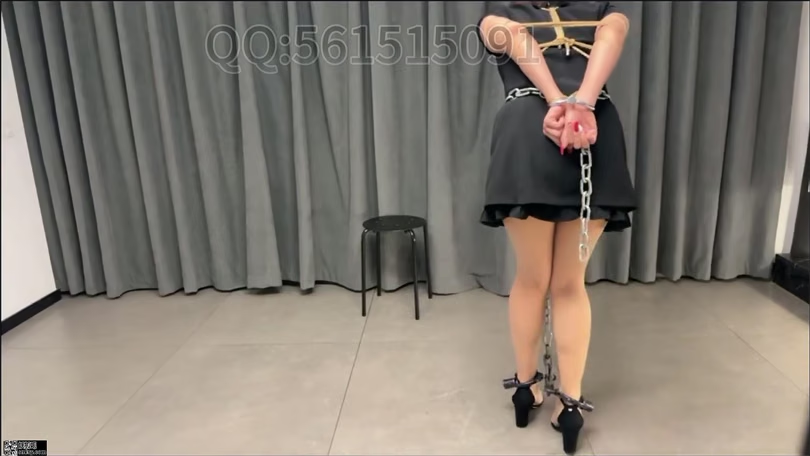  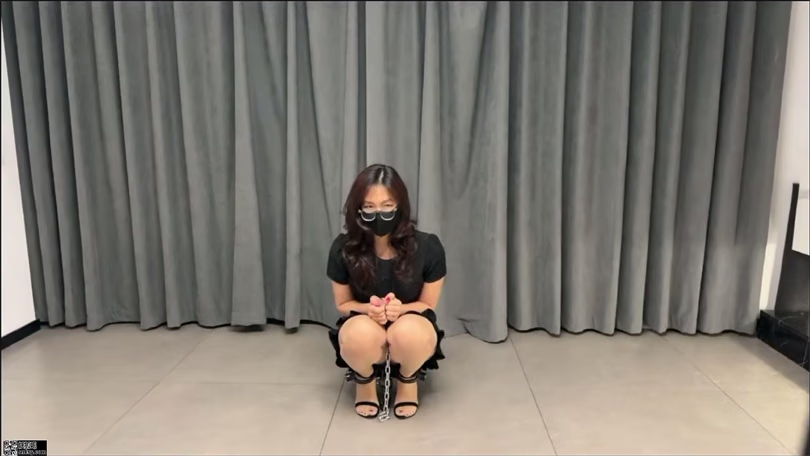 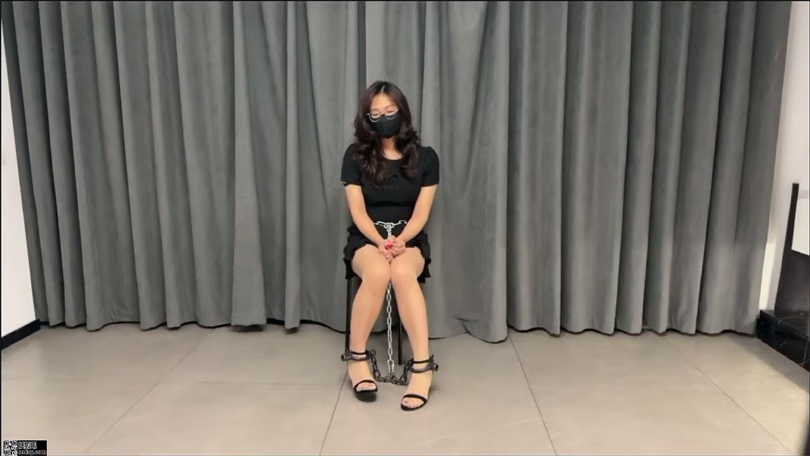        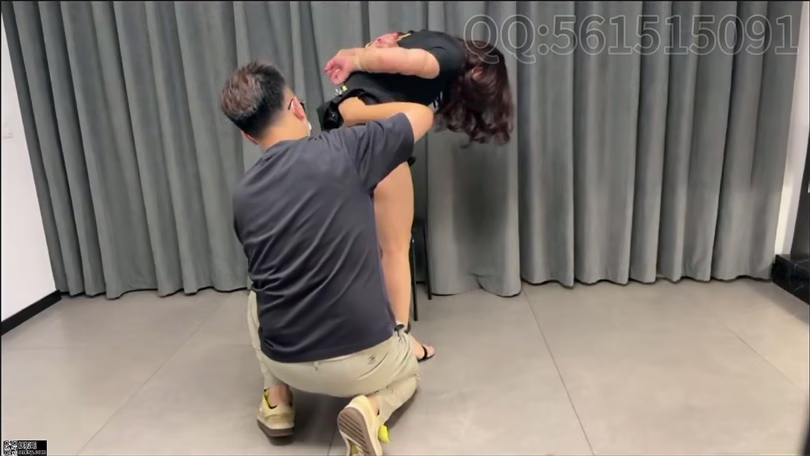 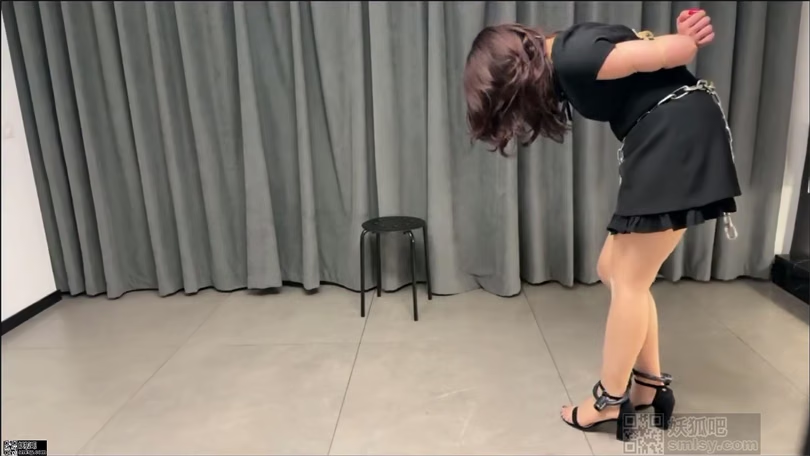 
Checkout
Pay 16 Money to buy this work
|
|
|
|
